Gold Rate and Brent Crude Today: How Prices Are Behaving After the Latest Iran War Escalation — and What It Means for India (July 14, 2026)
By Satyapal Khakhal
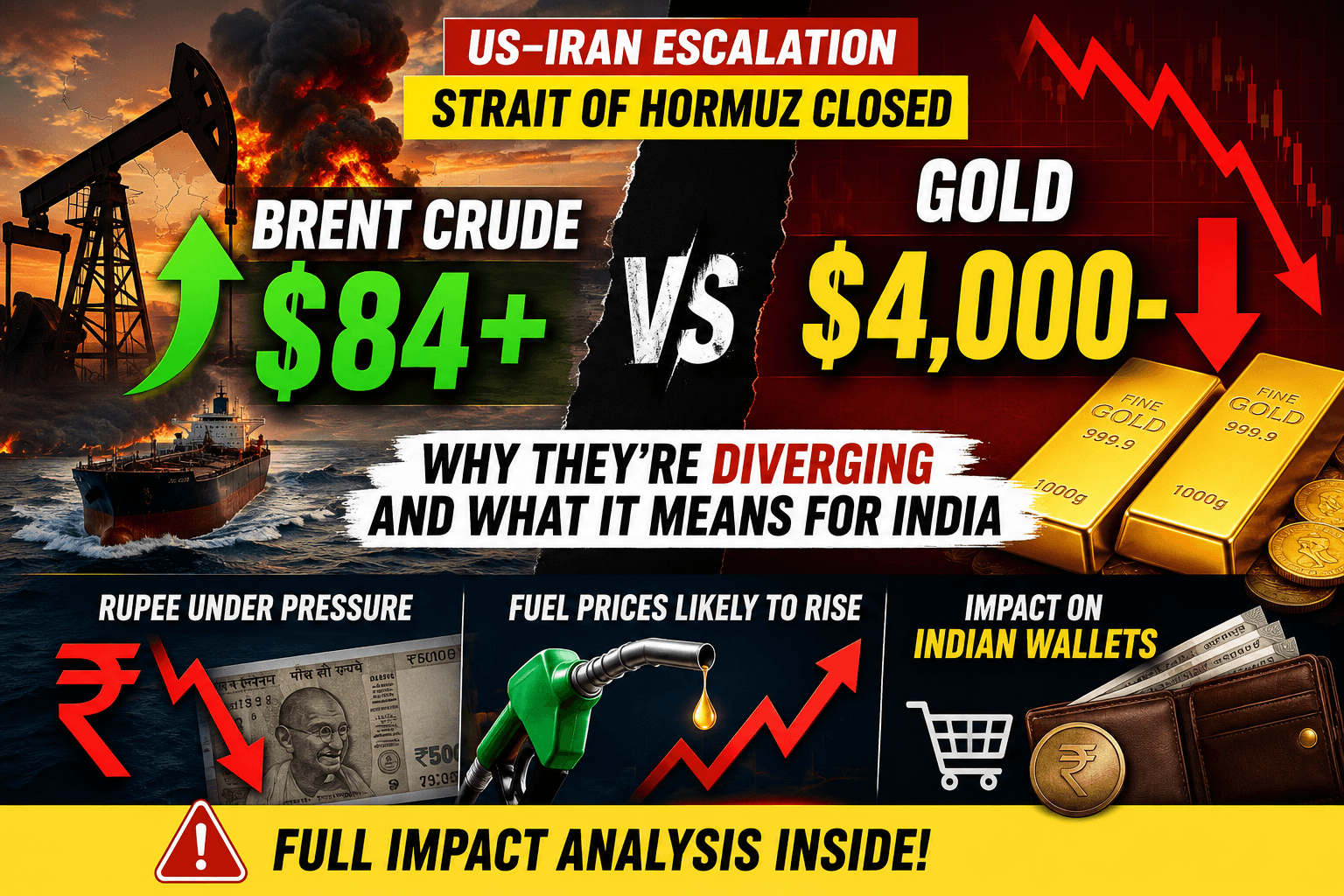
Markets are witnessing one of the most unusual commodity setups of the year. As the US–Iran conflict escalated sharply over the weekend and Iran once again moved to close the Strait of Hormuz, oil has surged while gold — the traditional safe haven — has slumped below $4,000. For Indian consumers and investors, this combination hits especially hard. Here's a clear look at where prices stand today, why they're moving this way, and how it's landing on Indian wallets.
Gold Rate Today: Falling Despite War Fears
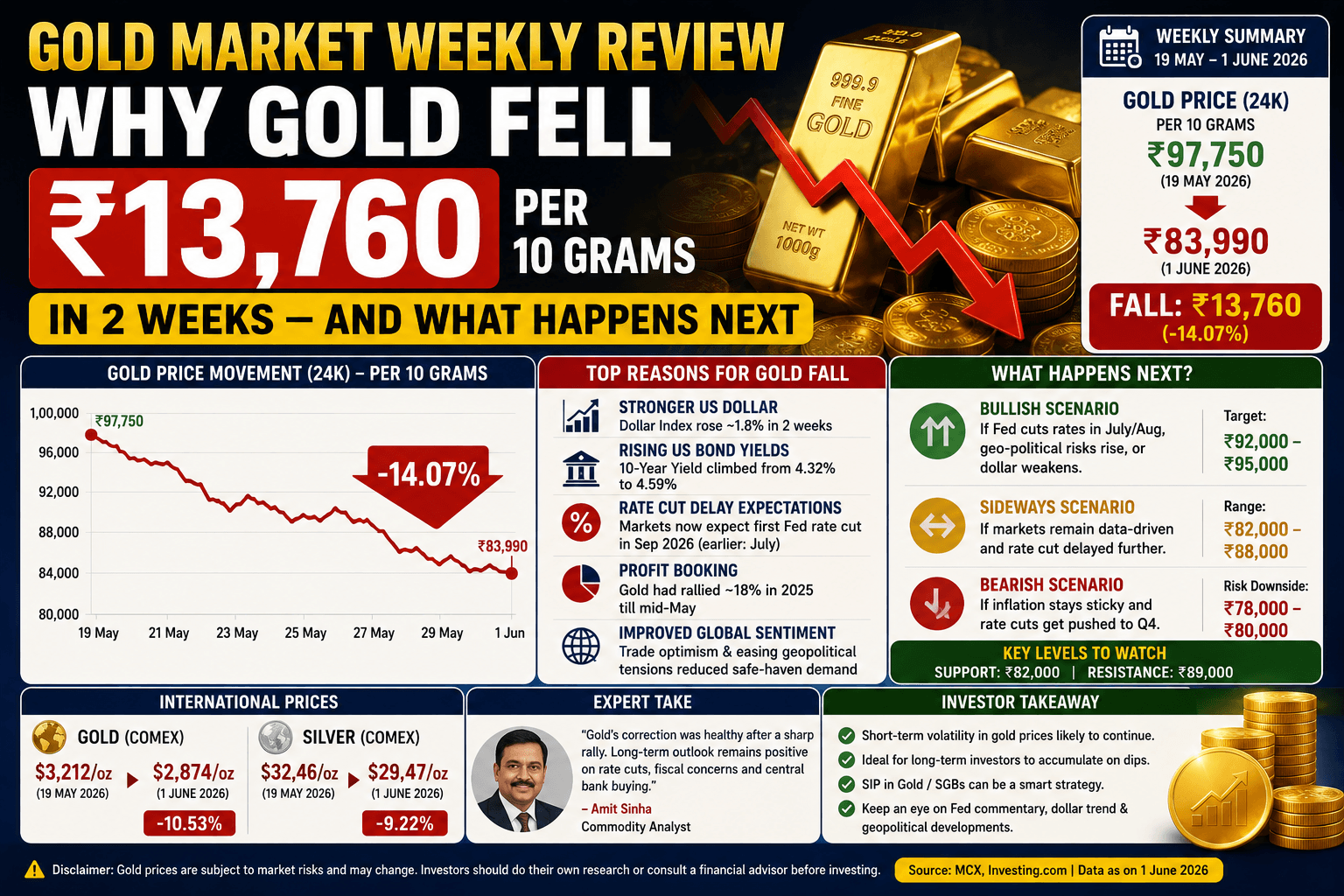
Globally, gold is trading around $4,011–$4,024 per ounce on Tuesday, July 14, down roughly 2.6% from the previous day and sitting at its lowest level since July 1. On Monday, gold had already dropped more than 2% to about $4,020, and it briefly slipped under the psychologically important $4,000 mark in Asian trade, touching an intraday low near $3,986 before recovering slightly.
In India, the picture is mixed because a weak rupee cushions the fall. On the MCX, August gold futures traded above ₹1.40 lakh per 10 grams, actually rising over ₹650 intraday even as international prices stayed soft. In the retail market, 24-karat gold is around ₹14,280 per gram and 22-karat around ₹13,090 per gram, with prices varying by city due to local taxes, making charges, and dealer premiums. (Remember: retail rates exclude the 3% GST and making charges added at purchase.) You can track live city-wise rates on our gold rate today page.
This is the paradox catching many investors off guard: geopolitical turmoil that would normally send gold soaring is instead pushing global prices lower. For roughly five months, since the conflict flared in February, gold has behaved more like a risk-sensitive asset than a classic safe haven.
Brent Crude Today: Surging on Supply Fears
Oil is the standout mover. Brent crude, the international benchmark, jumped 9.6% on Monday to close at around $83.30 per barrel — its biggest single-day gain since May 2020. On Tuesday, Brent extended those gains, trading near $84–$85 per barrel. US benchmark WTI followed, sitting around $78–$80.
The trigger was a dramatic escalation. Over the weekend the US carried out its fourth strike in a week against Iran, and Iran retaliated against US allies across the Gulf, including a reported attack on a Kuwaiti offshore drilling platform. Tehran declared the Strait of Hormuz — which carries around 20% of the world's oil trade — closed "until further notice," a claim disputed by US Central Command, which insists the waterway remains open.
President Donald Trump added fuel to the rally by announcing the US would reimpose a naval blockade on Iranian vessels and demand a 20% fee on all cargo passing through Hormuz, positioning the US as the "guardian" of the strait. At current prices, that fee would translate to roughly $30 million for a full supertanker. Maritime traffic through the strait has thinned dramatically, with intelligence firms tracking only a handful of crossings compared with the usual 18–22 per day.
Why Gold Is Falling While Oil Rises
The link between the two moves is inflation. Here is the chain reaction driving markets:
Rising oil prices feed directly into inflation. Higher inflation strengthens the case for the US Federal Reserve to raise interest rates, or at least keep them elevated for longer. And higher interest rates are a headwind for gold, because the metal pays no yield — when rates rise, the opportunity cost of holding gold goes up.
As a result, markets are now pricing in a nearly 70% chance of a Fed rate hike in September, up sharply from around 57% a week earlier. That expectation, combined with a firmer US dollar, is overwhelming gold's usual safe-haven appeal.
How This Is Hitting Indian Consumers and Investors
This is where the global story becomes a household story. India imports roughly 85–88% of its crude oil, so a spike in Brent flows almost directly into the domestic economy through three channels: the rupee, fuel prices, and everyday inflation.
The rupee is under pressure. The USD/INR pair climbed to around ₹95.9–96.1 per dollar, a more-than-six-week high, as the oil spike widened worries about India's import bill. Because India pays for oil in dollars, a weaker rupee makes every barrel more expensive in local terms — a double blow when both crude and the dollar are rising together. Analysts note the full pain of an oil shock typically shows up in the currency months later, as the higher import bill and any capital outflows feed through.
Fuel and transport costs. As a rough rule of thumb, every $10 rise in crude can add around 40–50 basis points to India's inflation trajectory, with the first effects visible within weeks in fuel-linked categories — petrol, diesel, LPG, aviation fuel, and transport. Retail petrol and diesel in many cities are already elevated (petrol around ₹111 and diesel around ₹98 per litre in several metros), and state-run oil marketing companies have periodically absorbed losses before passing on hikes.
The knock-on to daily essentials. Higher freight and logistics costs eventually spread to milk, packaged foods, edible oils, vegetables, FMCG goods, and even online delivery. This is why an event thousands of kilometres away in the Gulf ends up on an Indian grocery bill.
A silver lining for gold holders. There is one offset. Because international gold is priced in dollars and then converted to rupees, a weaker rupee lifts the domestic price of gold. That's exactly why Indian gold prices held up — even rose — on the MCX today while global prices fell. For Indian investors already holding gold, rupee weakness partly shields their holdings from the global slide. The same dynamic applies to silver, which has also stayed firm domestically; you can check the latest silver rate today for a full comparison.
For equity investors, the immediate effect has been caution: the Sensex and Nifty have traded soft, and volatility gauges have risen, though foreign investors have been selective net buyers in July. Currency-driven equity moves are usually one factor among many, so long-term investors are generally advised not to react to short-term rupee swings alone.
Key Levels and Signals to Watch
On the technical side, gold's fall to the $3,985–$4,000 zone has produced early signs of a possible bottom, with some momentum indicators showing bullish divergence. A sustained hold above $4,000 would suggest bulls are defending the level, while a break below the $3,960 support could open the door toward $3,800. On the upside, a move back above $4,300 would signal the bullish structure has been restored — but that largely depends on a diplomatic breakthrough at Hormuz that cools oil prices.
For oil, analysts broadly expect Brent to hold in the upper $70s to low $80s in the coming months, with occasional spikes and dips tied to the conflict, rather than a return to the $120 levels seen earlier in the war. For India, the widely cited threshold is that Brent needs to fall below roughly $90 — or maritime stability to return to Hormuz — before pressure on the rupee and inflation meaningfully eases.
What Comes Next
This week brings crucial catalysts. Fed Chair Kevin Warsh delivers his first monetary policy testimony before the US Congress, and the US releases June inflation data (CPI on Tuesday, PPI on Wednesday) along with retail sales. India, too, awaits its own CPI reading, expected to tick up. These prints will heavily influence rate-hike expectations — and, by extension, gold, oil, and the rupee.
The bottom line: until the Strait of Hormuz de-escalates and oil-driven inflation fears ease, gold may stay under global pressure while crude remains volatile and elevated — and Indian consumers feel the pinch through fuel and a weaker rupee. A genuine diplomatic resolution would likely flip the script, sending oil lower, easing pressure on the rupee, and giving gold room to reclaim its safe-haven shine.
Related reading:
Disclaimer: This article is for informational purposes only and does not constitute investment advice. Commodity and currency prices are highly volatile, especially during geopolitical crises, and past performance is not indicative of future results. Gold rates quoted are indicative and exclude GST, TCS, and making charges. Please consult a SEBI-registered financial advisor before making investment decisions.