Why Gold Prices Are So Volatile in 2026: War, Inflation & Market Reality Explained
By Satyapal Khakhal, Personal Finance Writer | Last Updated: May 25, 2026
Gold used to be considered the safest and most predictable asset in an Indian household. People bought it for weddings, long-term savings, and protection during economic uncertainty.
But 2026 has completely changed how gold behaves.
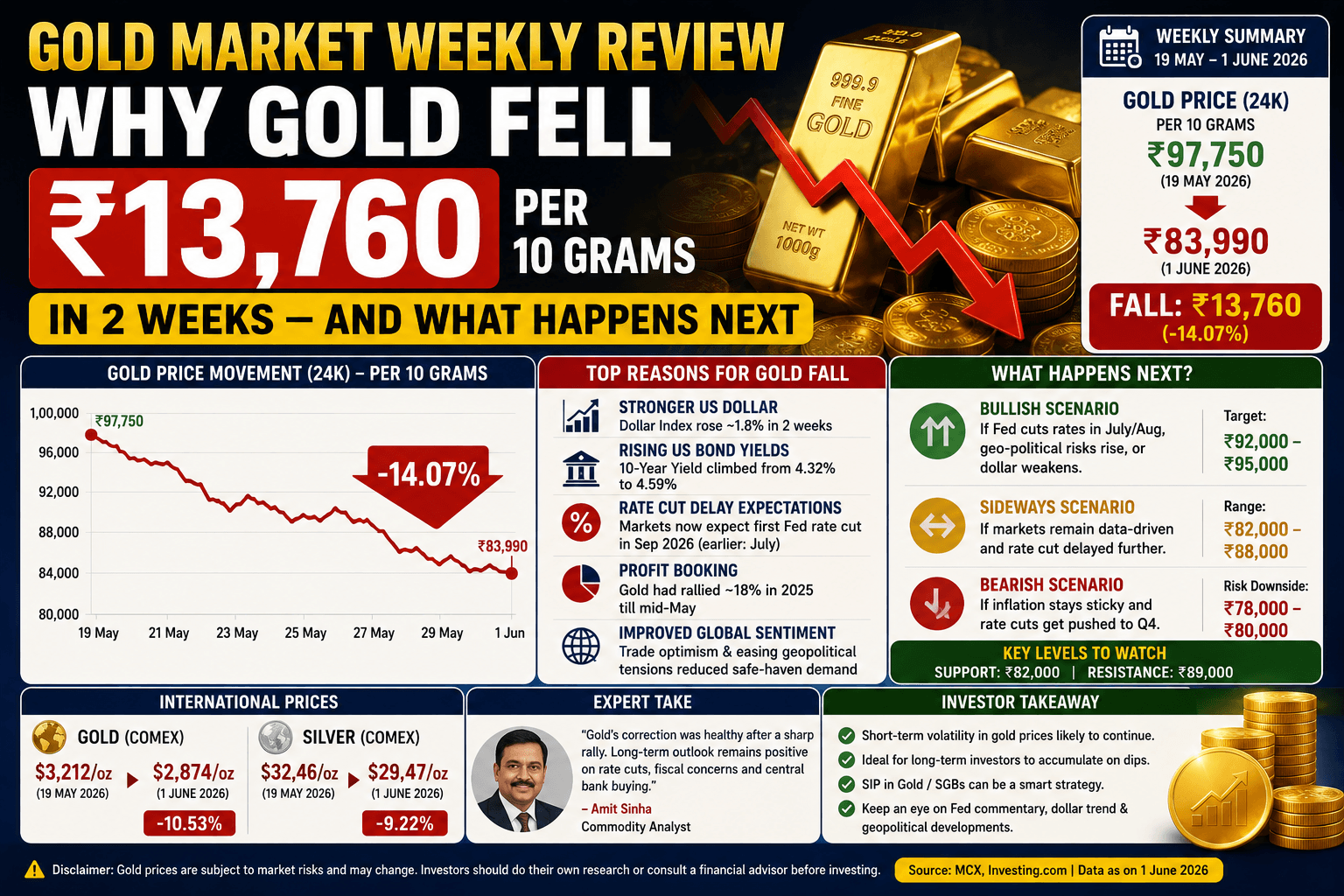
International gold prices touched record highs near $5,600 per ounce, then corrected sharply by almost 25%, before recovering again within weeks. At the same time, Indian gold prices remained elevated because of a falling rupee and a major import duty hike.
The result is one of the most volatile gold markets India has seen in years.
This article explains the five biggest reasons why gold prices are swinging so aggressively in 2026 — and what Indian investors should actually understand before buying.
Quick Snapshot: Gold Market in 2026
| Factor | Current Situation |
|---|---|
| International Gold Peak | ~$5,600/oz |
| Current Gold Price | ~$4,500/oz |
| India Import Duty | 15% |
| USD/INR | ₹95.6 |
| Indian Gold Rate | ~₹1,52,000 per 10g |
| Rupee Depreciation | ~7% YTD |
1. The US–Iran Conflict Created Massive Safe-Haven Demand
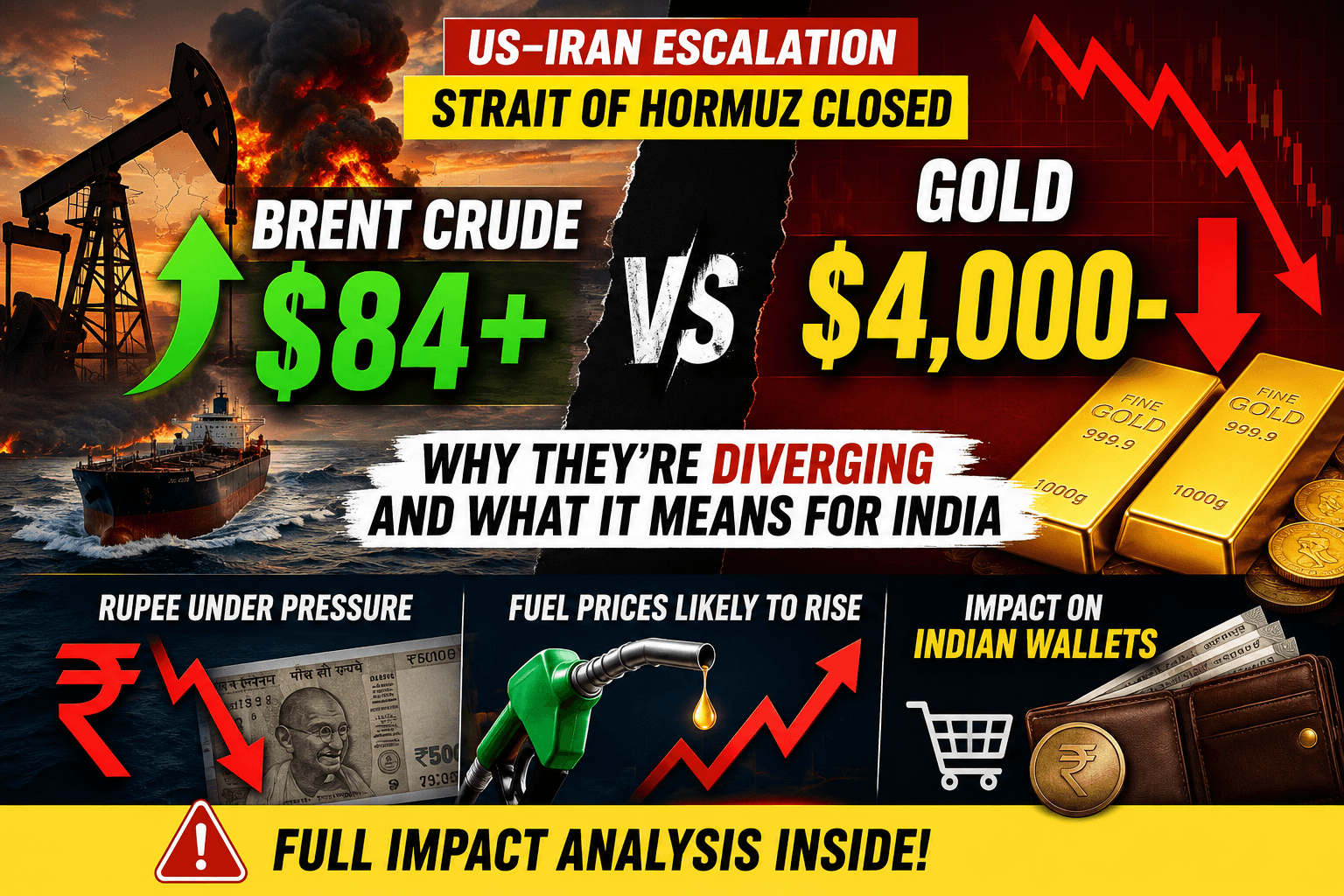
The biggest short-term driver of gold volatility in 2026 has been geopolitical tension between the United States and Iran.
Whenever major wars or geopolitical conflicts begin, investors usually move money out of risky assets like stocks and into safe-haven assets like gold.
That is exactly what happened in early 2026. Gold prices surged rapidly after the conflict escalated.
But something unexpected happened afterward:
Gold prices later fell sharply even while the conflict continued.
The reason was liquidity pressure. As oil prices surged and global markets became unstable, many investors sold gold to cover losses in other assets.
This created large short-term swings in gold prices despite continued geopolitical uncertainty.
2. Inflation and Federal Reserve Policy Are Pulling Gold in Opposite Directions
Most people assume inflation automatically pushes gold higher. That is partly true over long periods.
But in 2026, inflation also created pressure for higher US interest rates.
The Iran conflict pushed oil prices higher, increasing global inflation expectations. In response, markets began expecting the US Federal Reserve to delay interest-rate cuts.
Higher interest rates hurt gold because gold does not generate income.
When investors can earn higher returns from bonds or savings instruments, gold becomes relatively less attractive.
That is why gold sometimes fell even during periods of rising inflation.
3. The Falling Rupee Is Making Gold More Expensive in India
One of the most important reasons Indian gold prices remain extremely high is the falling rupee.
Gold is internationally priced in US dollars. When the rupee weakens against the dollar, India must pay more rupees for the same amount of imported gold.
By May 2026, the rupee had weakened more than 7% against the dollar year-to-date.
This means Indian gold prices rose even during periods when international gold prices corrected.
For Indian investors, the currency effect amplified gold returns significantly.
Example:
International Gold Gain = 10%
Rupee Depreciation = 7%

Effective INR Gold Return ≈ 17.7%
This is one reason Indian gold prices have stayed close to record highs despite global corrections.
4. India Increased Gold Import Duty to 15%
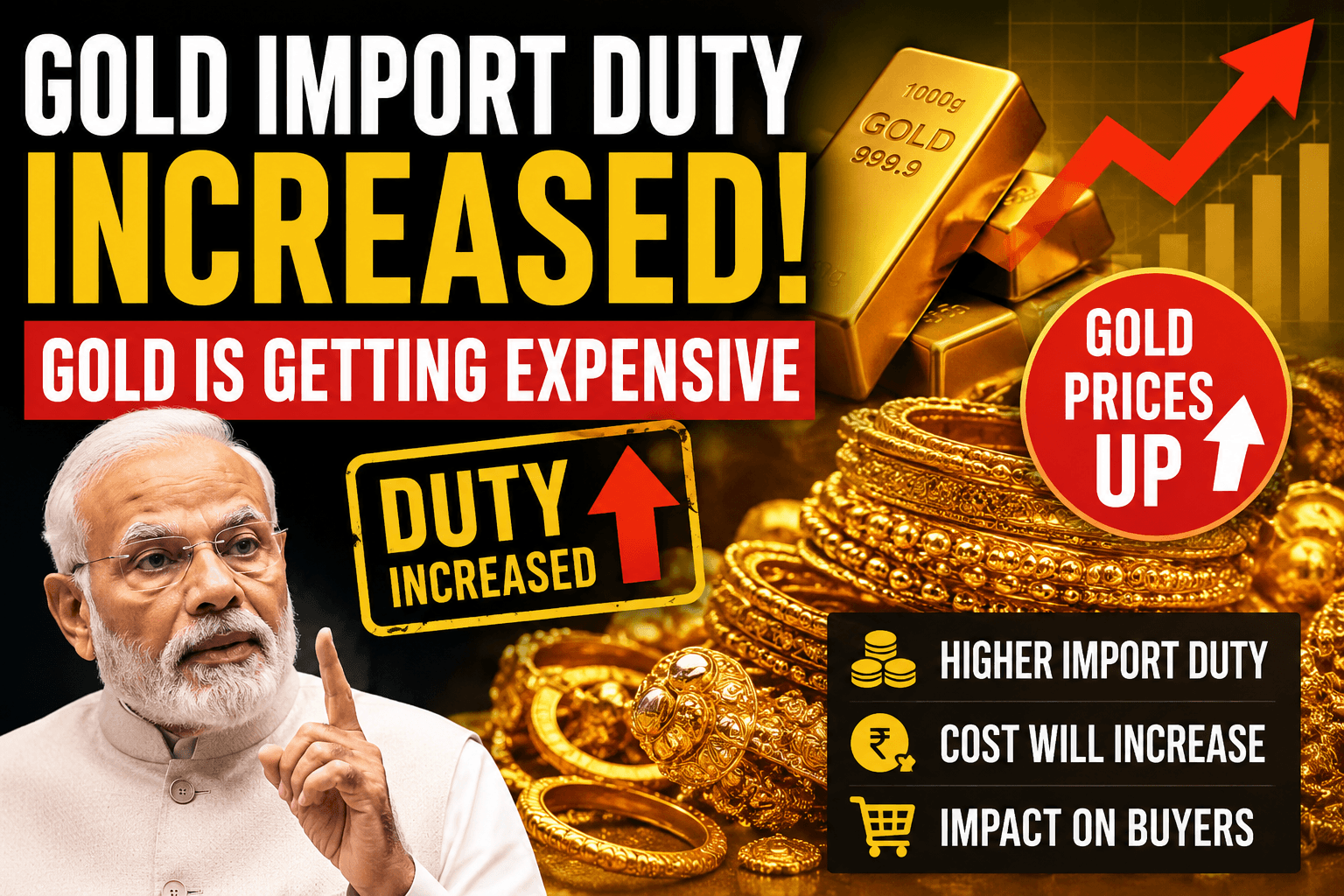
On May 13, 2026, India increased gold import duty from 6% to 15%.
This was the largest gold duty increase in recent history.
The government introduced the hike mainly to reduce imports and protect foreign exchange reserves as the rupee weakened.
The immediate impact was huge:
- Domestic gold prices jumped 4–6%
- Gold demand weakened
- Jewellery purchases slowed
- Investment gold became more expensive instantly
This duty increase permanently raised the base price of gold in India.
Even if global gold prices stay flat, Indian buyers now pay significantly more because of taxes and currency weakness.
5. Central Banks Continue Buying Gold Aggressively
Behind all the short-term volatility, there is another major long-term force supporting gold:
Central bank buying.
Countries around the world — including India — have been increasing gold reserves steadily.
The RBI held more than 822 tonnes of gold reserves by early 2026.
Many countries are trying to diversify away from dependence on the US dollar. That has created strong institutional demand for gold globally.
This buying acts like a structural floor under gold prices.
Even during corrections, central banks often continue accumulating gold reserves.
Why Gold Feels More Volatile Than Before
Gold is no longer moving because of just one factor.
In 2026, multiple powerful forces are affecting prices simultaneously:
- War and geopolitical uncertainty
- Oil prices
- US interest rates
- Inflation
- Rupee depreciation
- Import duties
- Central bank demand
That combination creates extremely large and unpredictable price swings.
Should Indian Investors Buy Gold in 2026?
Long-Term Investors
Gold still remains a useful hedge against:
- Currency depreciation
- Geopolitical risk
- Inflation
But because prices are already elevated, gradual accumulation may be safer than lump-sum buying.
Short-Term Traders
Short-term gold trading has become extremely difficult in 2026 because prices react rapidly to:
- Iran conflict headlines
- Federal Reserve statements
- Oil prices
- USD/INR movements
Volatility may remain elevated for the rest of the year.
Key Takeaway
Gold volatility in 2026 is not random.
It is being driven by a rare combination of:
- Geopolitical conflict
- Inflation pressure
- Federal Reserve policy uncertainty
- Rupee weakness
- India's 15% import duty
- Strong central bank demand
For Indian investors, understanding the rupee and import-duty effect is just as important as tracking global gold prices.
Even if international gold stabilizes, Indian gold prices can remain elevated because of currency depreciation and taxation.
Frequently Asked Questions
Why is gold so volatile in 2026?
Gold prices are reacting simultaneously to war, inflation, oil prices, Federal Reserve policy, rupee depreciation, and import duty changes.
Why are Indian gold prices higher than global gold prices?
India imports most of its gold. A weaker rupee and 15% import duty significantly increase domestic prices.
Does inflation always push gold higher?
Not always. Higher inflation can also lead to higher interest rates, which sometimes pressure gold prices lower.
How does the falling rupee affect gold?
A weaker rupee increases the cost of imported gold, pushing domestic gold prices higher even if international prices remain stable.
Should I buy gold now?
Long-term investors often accumulate gradually during volatile periods rather than investing large amounts at once.
Disclaimer: This article is for informational and educational purposes only and should not be considered investment advice. Gold prices, taxes, import duties, and exchange rates change frequently. Please consult a SEBI-registered financial advisor before making investment decisions.