Axis Atlas vs Amex Platinum Travel Credit Card (2026): Honest Comparison for Indian Travellers
By Satyapal Khakhal, Personal Finance Writer | Last Updated: 23 May 2026
This comparison is based on publicly available card terms from Axis Bank and American Express India, cardholder reports on CardInsider and Paisabazaar, and independent reward valuation analysis as of May 2026. gpaisa.in is not affiliated with Axis Bank or American Express and receives no compensation for this review.
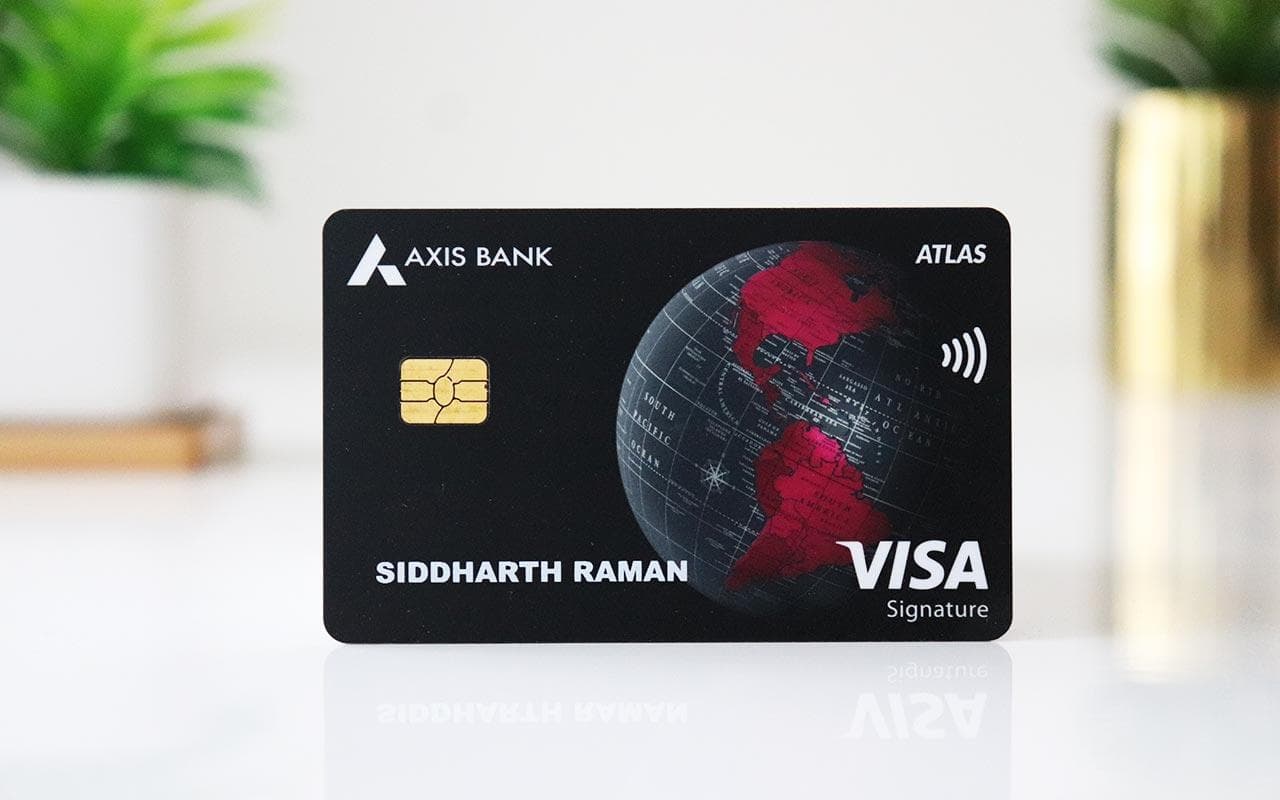
This comparison comes with an important 2026 update that changes the entire conversation: Axis Atlas is no longer accepting new applicants. Axis Bank stopped issuing the Atlas to new cardholders in mid-2025. Existing cardholders can continue using the card, but if you are reading this while considering which card to apply for, the Atlas is off the table for you.
That said, this comparison remains highly relevant. Thousands of existing Atlas cardholders are deciding whether to keep the card or switch. Others are trying to understand whether the Amex Platinum Travel is the right next card. And the comparison itself — EDGE Miles vs Membership Rewards, milestone benefits vs base earning rates, Visa acceptance vs the Amex acceptance gap — helps clarify what you actually need from a travel card before you choose an alternative.
Here is the honest, numbers-based breakdown.
Key Facts at a Glance
| Feature | Axis Atlas | Amex Platinum Travel |
|---|---|---|
| Annual fee | ₹5,000 + GST | ₹5,000 + GST |
| Fee waiver | ₹15 lakh annual spend | No spend-based waiver |
| Card network | Visa (universal acceptance) | American Express (limited acceptance) |
| New applicants | ❌ Closed since mid-2025 | ✅ Open |
| Reward currency | EDGE Miles | Membership Rewards points |
| Base earn rate | 2 EDGE Miles per ₹100 | 2 MR points per ₹100 |
| Travel earn rate | 5 EDGE Miles per ₹100 | No travel category bonus |
| Milestone rewards | ₹3L → 2,500 miles; ₹7.5L → 2,500 miles; ₹15L → 5,000 miles | ₹1.9L → 15,000 pts; ₹4L → 25,000 pts + Taj voucher |
| Domestic lounge | Up to 18 visits/year (tier-based) | 8 visits/year |
| International lounge | Up to 12 visits/year (tier-based) | Priority Pass (paid after 2 free visits) |
| Transfer partners | ~14 airline and hotel partners | Marriott Bonvoy + select airlines |
| Forex markup | 3.5% | 3.5% |
Reward Rates: Where Each Card Actually Earns
Both cards earn 2 points per ₹100 at their base rate, but the similarity ends there. Understanding how each card's earning structure works in practice — not just on paper — is essential before committing ₹5,000 in annual fees.
Axis Atlas reward structure: The Atlas was built around a tiered earning model. At its base, you earn 2 EDGE Miles per ₹100 on all eligible spends. Travel and international spends earn 5 EDGE Miles per ₹100 — a genuine 2.5x multiplier that makes the card particularly effective for people who book flights and hotels directly (not through OTAs like MakeMyTrip or Yatra, which earned at the lower rate). The card also had three milestone tiers: ₹3 lakh annual spend unlocks 2,500 bonus miles, ₹7.5 lakh unlocks another 2,500, and ₹15 lakh unlocks 5,000 more. Collectively, a cardholder spending ₹15 lakh annually with strong travel concentration could realistically accumulate 80,000–1,00,000 EDGE Miles per year — enough for meaningful business class redemptions on international partners.
Amex Platinum Travel reward structure: The Amex model is fundamentally different. There is no category-based acceleration — every rupee earns 2 Membership Rewards points regardless of whether you spend it at a restaurant or a travel portal. The value comes entirely from hitting the milestone thresholds. Spend ₹1.9 lakh in a year and Amex credits 15,000 bonus points automatically. Spend ₹4 lakh and you receive an additional 25,000 points plus a complimentary Taj Hotels voucher (currently valued at ₹10,000). At the ₹4 lakh threshold, the combined point earn plus Taj voucher is worth approximately ₹18,000–₹22,000 in value — against a ₹5,000 annual fee, the card effectively pays for itself three or four times over for someone who was already going to spend ₹4 lakh on a credit card anyway.
The honest comparison: if your annual card spending is ₹4 lakh or less and you can concentrate it on Amex, the milestone model wins on pure return. If your spending exceeds ₹5–6 lakh and significant portions go to travel and international transactions, the Atlas's base rate advantage compounds into a meaningfully larger miles balance.
The Amex Acceptance Problem: The Factor Most Comparisons Understate
American Express acceptance in India has improved significantly over the past five years, but it remains a genuine practical constraint that Visa and Mastercard cardholders do not face. Here is the reality as of 2026.
Amex works reliably at: major e-commerce platforms (Amazon, Flipkart have added support), large hotel chains, airline bookings, Swiggy and Zomato, most large-format retail, and urban restaurant chains. These cover the bulk of spending for a typical urban professional.
Where Amex frequently fails: standalone restaurants outside metro cities, local kiranas and neighbourhood stores, many government payment portals (utilities, property tax), fuel stations with older POS terminals, and a significant proportion of merchants in Tier 2 and Tier 3 cities. The underlying reason is economic — Amex charges merchants a higher merchant discount rate (MDR) than Visa or Mastercard, and many smaller merchants choose not to absorb that cost.
The practical implication: if Amex is your only credit card, you will encounter declined transactions regularly and need a backup Visa or Mastercard for those situations. This erodes the reward proposition, because spending that cannot go on Amex goes unrewarded on your backup card instead. Most financial analysts recommend treating Amex as a supplementary card rather than a primary card for this reason — which changes the annual fee calculus significantly.
Lounge Access: The Numbers Behind the Headlines
Both cards market lounge access as a flagship benefit, but the structure is quite different once you look past the headline numbers.
Axis Atlas lounge access operated on a tier-based system tied to annual spend. At the entry Silver tier (₹3 lakh annual spend), cardholders received 2 domestic and 2 international lounge visits per quarter. At Gold tier (₹7.5 lakh), this increased to 4 domestic and 3 international per quarter. At Platinum tier (₹15 lakh), the allowance was 6 domestic and 4 international per quarter — equivalent to 18 domestic and 12 international visits annually. Importantly, the lounge visits reset quarterly rather than annually, which rewards regular travellers but does not allow banking unused visits.
Amex Platinum Travel provides 8 domestic airport lounge visits per year through the Amex India Lounge Program, covering 25+ lounges across major airports. International lounge access comes via Priority Pass membership — but this is frequently misrepresented. The card includes the Priority Pass membership card (which gives access to 1,300+ lounges worldwide), but after the first two complimentary visits per calendar year, each subsequent visit costs USD 27 per person. For an infrequent international traveller taking 2–3 trips a year, the two free international visits are genuinely useful. For a frequent flyer taking 8–10 international trips, the paid-per-visit model becomes expensive quickly.
Transfer Partners: EDGE Miles vs Membership Rewards
This is where the cards most clearly serve different audiences, and where the Atlas historically held a significant advantage for serious miles collectors.
EDGE Miles transferred to airline frequent flyer programs at ratios that varied by partner — some at 1:1, others less favourable. The key partners included Air India Flying Returns, Vistara Club Vistara (now merged into Air India), Singapore Airlines KrisFlyer, British Airways Avios, and hotel programs including Marriott Bonvoy and IHG One Rewards. The variety and quality of transfer partners made EDGE Miles one of the most versatile points currencies available on an Indian-issued card.
Amex Membership Rewards points in India offer a narrower transfer ecosystem. The primary travel transfer partner is Marriott Bonvoy (2:1 ratio, meaning 2 MR points = 1 Marriott point — less efficient than direct Marriott spending). Airline transfer options in India are more limited than Amex's global program — the full international roster of airline partners is not available through the India-issued card. Points can also be redeemed against Amazon Pay balance, Flipkart vouchers, and merchandise through Amex's portal, which gives flexibility but typically at lower value than travel redemptions.
Real-Money Savings Comparison: Two Spending Profiles
Profile A — Moderate spender (₹4 lakh/year, mostly domestic):
On Amex Platinum Travel: Earns 8,00,000 × 2 = 8,000 base MR points through the year, plus 15,000 bonus points at ₹1.9L milestone and 25,000 bonus points plus a ₹10,000 Taj voucher at ₹4L milestone. Total value: approximately ₹18,000–₹22,000 against a ₹5,000 fee. Net benefit: ₹13,000–₹17,000.
On Axis Atlas (existing cardholders): Earns 80,000 base EDGE Miles (2 per ₹100 on non-travel spend) plus 2,500 bonus miles at ₹3L milestone. At a conservative valuation of 50 paise per EDGE Mile, total value: approximately ₹41,000–₹42,000. But this assumes full point value in premium redemptions — cash or low-value redemptions return significantly less. Net benefit at conservative valuation: ₹36,000.
Profile B — Heavy travel spender (₹10 lakh/year, 40% travel bookings):
On Amex Platinum Travel: Earns 20,00,000 × 2 = 20,000 base MR points plus all milestone bonuses totalling 40,000 additional points and a Taj voucher. Total point value at ₹1 per MR point: approximately ₹60,000. But Amex acceptance issues mean some spend goes to a backup card, realistically reducing this to ₹45,000–₹50,000.
On Axis Atlas: Earns 4 lakh × 5 EDGE Miles per ₹100 = 20,000 miles on travel + 6 lakh × 2 miles per ₹100 = 12,000 miles on other spend = 32,000 base EDGE Miles. Plus milestone bonuses totalling 10,000 miles. Total 42,000 EDGE Miles valued at approximately ₹21,000 at conservative rates — but at premium airline redemptions, potentially worth ₹60,000–₹80,000. The Atlas's advantage is largest for heavy travel spenders who can access premium redemptions.
Who Should Keep the Axis Atlas (Existing Cardholders)?
If you already hold the Axis Atlas, the decision to keep or cancel comes down to whether you are hitting the annual spend thresholds that justify the ₹5,000 fee. At ₹3 lakh annual spend, the base earning plus milestone bonus provides reasonable value. At ₹7.5 lakh and above, the card becomes clearly worth holding as long as you intend to redeem EDGE Miles for airline transfers rather than letting them sit idle. If you are spending under ₹2 lakh annually on the card and not using it for travel bookings, the fee is hard to justify — consider downgrading to a no-fee Axis card and retaining your EDGE Miles balance.
Who Should Apply for the Amex Platinum Travel?
The Amex Platinum Travel makes clear financial sense in a specific and somewhat narrow profile: an urban professional spending ₹3–5 lakh annually on credit cards, with the majority of that spend at Amex-accepting merchants (online shopping, dining at restaurant chains, hotel bookings, flights), who would genuinely use a Taj Hotels voucher, and who is comfortable holding a second Visa or Mastercard for situations where Amex is not accepted. Outside this profile — particularly for anyone who needs a single primary card that works everywhere — the acceptance limitation is a real problem that the milestone rewards do not fully compensate for.
Best Alternatives If You Are Applying Fresh in 2026
Since Axis Atlas is closed to new applicants, here are the strongest alternatives currently accepting applications:
HSBC TravelOne (₹4,999 fee): The most direct functional replacement for the Atlas. Twenty airline and hotel transfer partners at largely 1:1 ratios, instant app-based transfers, 6 domestic and 4 international lounge visits, plus 4 complimentary chauffeur airport transfers new in 2026. Currently the best flexible travel card accepting new applications in India. Full review at gpaisa.in/articles/hsbc-travelone-review-2026.
HDFC Regalia Gold (₹2,500 fee): Strong domestic focus, 12 domestic lounge visits, lower forex markup at 2% (versus 3.5% on both Atlas and Amex), and a broader acceptance footprint. Better for people who travel domestically more than internationally and want a lower fee entry point.
Amex Platinum Travel: Retain as a strong option for the milestone-based rewards model, particularly if your spending profile fits the ₹4 lakh threshold. Best used alongside a Visa or Mastercard, not as a standalone primary card.
The Honest Verdict
In a direct head-to-head, the Axis Atlas was the stronger travel card for most Indian frequent flyers — better base earning rate on travel spends, more transfer partners, tier-based lounge access that rewarded heavy users, and Visa acceptance that eliminated the merchant gap problem. The Amex Platinum Travel wins specifically at the ₹4 lakh spend milestone where its bonus point and Taj voucher combination delivers outsized value relative to the fee.
The 2026 reality, however, makes the comparison somewhat academic for new applicants. If you cannot get the Atlas, the HSBC TravelOne is the closest current alternative for mileage collectors. If you are considering the Amex Platinum Travel as your only credit card, the acceptance limitations are a real practical constraint that you should weight more heavily than most marketing comparisons suggest. If you are using it alongside a Visa or Mastercard backup and can reliably spend ₹4 lakh on it annually, it delivers solid value for the fee.
Axis Atlas rating: 4.3/5 (for existing cardholders; not available for new applicants)
Amex Platinum Travel rating: 3.7/5 (strong at ₹4L milestone; weak as a standalone primary card)
Best new applicant alternative: HSBC TravelOne — 4.1/5
Frequently Asked Questions
Is the Axis Atlas Credit Card still available in 2026?
No. Axis Bank stopped issuing new Atlas cards in mid-2025. Existing cardholders can continue using the card normally, but fresh applications are not accepted. The closest current alternative accepting new applicants is the HSBC TravelOne, which offers 20 transfer partners at 1:1 ratios.
What is the Amex Platinum Travel annual fee and is it waived?
The annual fee is ₹5,000 plus GST. There is no standard spend-based fee waiver — unlike most Indian credit cards, Amex does not waive the renewal fee regardless of annual spending. The fee is offset by milestone benefits at ₹1.9 lakh (15,000 bonus points) and ₹4 lakh (25,000 bonus points plus a ₹10,000 Taj voucher).
Is Amex accepted everywhere in India?
No. Amex has lower merchant acceptance than Visa or Mastercard, particularly at smaller retailers, local stores, government payment portals, and in Tier 2 cities. It works reliably at major e-commerce platforms, hotel chains, airlines, and urban restaurant chains. Most users hold a Visa or Mastercard as a backup for situations where Amex is not accepted.
Which is better — EDGE Miles or Membership Rewards points?
EDGE Miles are optimised for airline and hotel transfers, typically at better ratios for premium cabin redemptions. Membership Rewards are more flexible — redeemable against Amazon Pay, Flipkart, hotel stays, or select airline transfers. For pure mileage accumulation toward business class flights, EDGE Miles have historically been more efficient. For flexibility across multiple redemption types, Membership Rewards offer broader options.
What is the best alternative to Axis Atlas for new applicants in 2026?
The HSBC TravelOne is currently the most direct functional replacement — 20 airline and hotel transfer partners at largely 1:1 ratios, ₹4,999 annual fee, instant app-based transfers, and lounge access through LoungeKey. Read the full comparison at gpaisa.in HSBC TravelOne review.
Does the Amex Platinum Travel card offer free international lounge access?
Partially. The card includes a Priority Pass membership, which provides access to 1,300+ lounges worldwide. However, only the first two international lounge visits per year are complimentary — subsequent visits cost USD 27 per person. For infrequent international travellers this is adequate; for frequent flyers taking 6+ international trips annually, the per-visit cost adds up significantly.
Related reading: HSBC TravelOne Credit Card Review (2026) | Best Credit Cards in India 2026 | IndusInd EazyDiner Review (2026)
Disclaimer: This comparison is published for informational purposes only and does not constitute financial or investment advice. Credit card features, fees, reward rates, transfer partners, and availability are subject to change by Axis Bank and American Express at any time. Information is based on publicly available data as of May 2026. Please verify all current terms directly on the Axis Bank and American Express India websites before making any application decision. gpaisa.in is not affiliated with Axis Bank or American Express and receives no compensation for this review.