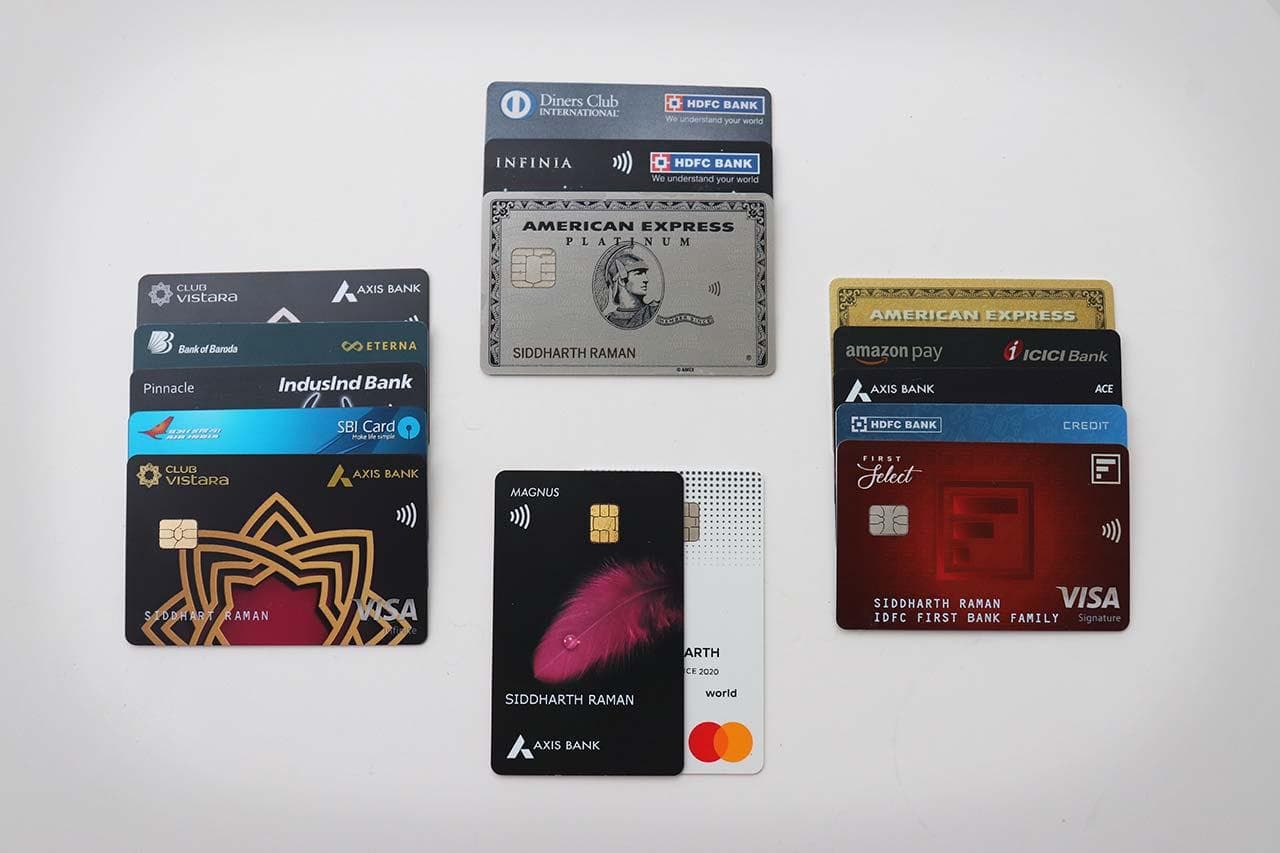
Axis Atlas vs HDFC Infinia Credit Card (2026): Honest Comparison for High Spenders
By Satyapal Khakhal, Personal Finance Writer | Last Updated: 23 May 2026
This comparison is based on publicly available card terms from Axis Bank and HDFC Bank India, reward point valuation analysis, and cardholder experience data from CardInsider, Paisabazaar, and personal finance communities as of May 2026. gpaisa.in is not affiliated with Axis Bank or HDFC Bank and receives no compensation for this review.
Before this comparison goes any further, there is a 2026 development that changes the entire conversation: Axis Bank stopped accepting new Atlas Credit Card applications in mid-2025. The Atlas is no longer available to new applicants. Existing cardholders can continue using it, but anyone reading this to decide which card to apply for needs to know upfront that one of the two options is off the table.
That said, this comparison remains useful for three groups. First, existing Atlas cardholders deciding whether to keep the card or upgrade. Second, people evaluating the HDFC Infinia who want to understand what they are giving up compared to the Atlas's mile-transfer model. Third, anyone trying to understand the fundamental difference between an airline-miles-oriented card and a points-flexibility card — because that distinction will guide every premium travel card decision they make in future.
Here is the honest, numbers-based breakdown of both cards.
Important 2026 Update: Axis Bank has officially stopped accepting new applications for the Axis Atlas Credit Card. Existing Atlas cardholders can continue using the card and earning EDGE Miles normally, but fresh applications are no longer available. Readers looking for similar travel-focused alternatives may consider cards like HSBC TravelOne or HDFC Regalia Gold.
At a Glance: Key Facts Side by Side
| Feature | Axis Atlas | HDFC Infinia |
|---|---|---|
| Annual fee | ₹5,000 + GST | ₹12,500 + GST |
| Fee waiver threshold | ₹15 lakh annual spend | ₹10 lakh annual spend |
| Availability | ❌ Closed to new applicants since mid-2025 | ✅ Invite-only (existing HDFC customers) |
| Card network | Visa (universal acceptance) | Mastercard World Elite |
| Reward currency | EDGE Miles | HDFC Reward Points |
| Base earn rate | 2 EDGE Miles per ₹100 | 5 points per ₹150 (~3.3 pts per ₹100) |
| Travel earn rate | 5 EDGE Miles per ₹100 | 10X on SmartBuy (capped per month) |
| Point value | ~₹0.40–₹0.60 per EDGE Mile (airline transfer) | ~₹0.20–₹1.00 per point (redemption-dependent) |
| Domestic lounge | Up to 18 visits/year (tier-based) | Unlimited (primary cardholder) |
| International lounge | Up to 12 visits/year (tier-based) | Unlimited Priority Pass (primary cardholder) |
| Transfer partners | ~14 airline and hotel partners | Taj InnerCircle + select airlines via SmartBuy |
| Concierge | Standard | 24/7 premium concierge |
| Golf | Not included | Complimentary golf rounds included |
| Forex markup | 3.5% | 2% |
Fees and the Fee Waiver: Which Card Is Cheaper to Hold?
At face value the fee gap looks enormous — ₹5,000 for Atlas versus ₹12,500 for Infinia, a 2.5x difference. But the fee waiver thresholds complicate the comparison significantly.
The Axis Atlas waives its ₹5,000 fee at ₹15 lakh annual spend — ₹1,25,000 per month. For most Atlas cardholders, hitting this threshold requires the Atlas to be an active primary card for a wide range of spending categories. Below that threshold, you pay ₹5,000 per year.
The HDFC Infinia waives its ₹12,500 fee at ₹10 lakh annual spend — approximately ₹83,000 per month. This is a lower absolute spend threshold than the Atlas's fee waiver despite the higher base fee. A high-earning professional spending ₹1 lakh per month on a credit card will clear the Infinia waiver more easily than the Atlas waiver. If both waivers are met, the effective annual cost of both cards is zero — which changes the fee comparison from a 2.5x difference to a draw.
The honest implication: if you are spending ₹83,000–₹1,25,000 per month on credit cards, the Infinia's fee is effectively free and the fee comparison becomes irrelevant. If you are spending ₹40,000–₹60,000 per month, neither card's fee is waived and you are paying ₹5,000 for Atlas or ₹12,500 for Infinia — at which point the fee difference is real and the Atlas has a clear cost advantage.
Reward Rates: The Architecture of Each Card's Earning Model
The two cards are built on fundamentally different earning philosophies, and understanding this difference is more important than comparing headline reward rates.
How Axis Atlas earns
The Atlas is a category-accelerator card. Its base rate is 2 EDGE Miles per ₹100 on all eligible spends. Travel and international spends — direct airline bookings, hotel bookings, international transactions — earn 5 EDGE Miles per ₹100. This 2.5x travel multiplier is where the card's value is concentrated. A cardholder spending ₹5 lakh annually on direct travel and international transactions earns 25,000 EDGE Miles from travel spending alone, before adding base earning on the remaining spend.
The Atlas also has three milestone tiers that add bonus miles on top of base earning: ₹3 lakh annual spend triggers 2,500 bonus miles, ₹7.5 lakh triggers another 2,500, and ₹15 lakh triggers 5,000 more. A cardholder spending ₹15 lakh annually with strong travel concentration could realistically accumulate 80,000–1,00,000 EDGE Miles per year through a combination of base earning, travel multiplier, and milestone bonuses.
How HDFC Infinia earns
The Infinia earns 5 reward points per ₹150 spent — which works out to approximately 3.3 points per ₹100 at the base rate. Unlike the Atlas, there is no standard travel category multiplier on the card itself. The acceleration comes through HDFC SmartBuy, HDFC's own shopping and travel booking portal, where Infinia cardholders earn 10X reward points.
At 10X on SmartBuy and a point value of approximately ₹0.50 at travel redemptions, the effective return on SmartBuy bookings is approximately 5%. This is genuinely strong — but it requires booking flights and hotels through SmartBuy rather than directly with airlines or on third-party OTAs. There is also a monthly cap on SmartBuy accelerated earnings (typically 15,000 bonus points per month), beyond which the SmartBuy rate reverts to normal. Verify the current cap on the HDFC website before planning any large purchase specifically to capture SmartBuy points.
The key difference in practice: the Atlas rewards you for booking travel directly with airlines and hotels anywhere, while the Infinia rewards you primarily for booking through HDFC's own portal. This matters if you have airline preferences, prefer to book directly for upgrade eligibility, or value the flexibility of booking with any platform.
Reward Point Valuation: What Each Point Is Actually Worth
Headline reward rates mean nothing without understanding what each point can buy. Both cards' points have variable value depending on how you redeem them — and the spread between low-value and high-value redemptions is large for both.
EDGE Miles valuation: Redeemed against statement credit or the Axis portal, EDGE Miles are worth approximately ₹0.20–₹0.25 per mile. Transferred to airline frequent flyer programs at standard ratios, the value jumps to ₹0.40–₹0.60 per mile based on economy class redemptions. For premium cabin redemptions — business class or first class on partner airlines — the value can reach ₹1.50–₹2.50 per mile depending on the route and the airline partner used. The highest value from EDGE Miles comes from booking aspirational premium cabin awards, which requires planning, flexibility, and familiarity with airline award charts. Most casual cardholders who do not engage with airline awards at this level will realise the lower end of this range.
HDFC Reward Points valuation: Redeemed against statement credit, HDFC points are worth ₹0.20–₹0.35 per point. Used to pay for travel through SmartBuy, the effective value rises to ₹0.50–₹0.75 per point depending on the booking. Transferred to Taj InnerCircle, the value is competitive for frequent Taj hotel guests. For Amazon Pay and other cashback-style redemptions, the value is at the lower end. Unlike EDGE Miles, HDFC points do not have an airline transfer ecosystem that enables dramatically higher aspirational valuations — the ceiling is lower, but the floor is also less variable. For cardholders who want predictable, accessible value without navigating airline award charts, HDFC points are easier to manage.
The practical implication: if you are willing to learn and engage with airline loyalty programs, EDGE Miles have higher peak value. If you want straightforward, high-value redemptions without complexity, HDFC points — especially through SmartBuy — deliver consistent returns.
Lounge Access: Tier-Based vs Truly Unlimited
This is where the Infinia has the clearest advantage over the Atlas, and where many cardholders underestimate the Infinia's practical superiority for frequent travellers.
The Axis Atlas provides lounge access on a tier-based system. At Silver tier (₹3 lakh annual spend): 2 domestic and 2 international visits per quarter. At Gold tier (₹7.5 lakh): 4 domestic and 3 international per quarter. At Platinum tier (₹15 lakh): 6 domestic and 4 international per quarter. Translated to annual totals, this is a maximum of 18 domestic and 12 international visits for Platinum-tier cardholders. For cardholders who do not hit the Platinum spend threshold, the allowance is substantially lower. Lounge visits also reset quarterly — you cannot bank unused visits from a low-travel quarter to use in a high-travel one.
The HDFC Infinia provides unlimited complimentary domestic lounge access for the primary cardholder through the Infinia Lounge Program covering 30+ lounges at major Indian airports. International lounge access is through a Priority Pass membership with no annual cap on primary cardholder visits. For a frequent business traveller taking 30–40 flights per year, the difference between "up to 18 domestic visits" and "unlimited" translates to real money — domestic lounge visits at airports typically cost ₹500–₹1,500 per entry for non-members.
Guest access policies vary and have been periodically revised by both banks — verify current guest entitlements on each bank's official website before assuming you can bring a travel companion in for free.
The Forex Markup Difference: Significant for International Travellers
One comparison point the old version of this article missed entirely: the Infinia's 2% forex markup versus the Atlas's 3.5% forex markup is a meaningful difference for international travellers.
On ₹5 lakh in international card spending per year, the Infinia's 2% markup costs ₹10,000 in forex fees while the Atlas's 3.5% markup costs ₹17,500 — a difference of ₹7,500 annually from markup charges alone. At ₹10 lakh in international spending, the gap is ₹15,000 per year. This partially offsets the Infinia's higher annual fee for cardholders who travel internationally frequently, and is a factor the Atlas's headline lower fee does not account for.
For cardholders who primarily spend domestically with only occasional international travel, this difference is negligible. For someone spending 30–40% of their annual card spend on international transactions, it is a genuine financial consideration that should factor into the fee comparison.
Exclusivity and Eligibility: Who Can Actually Get Each Card
Both cards have significant eligibility constraints that most comparisons understate.
Axis Atlas: Was available through standard application channels with a minimum annual income requirement of approximately ₹6–9 lakh for salaried applicants. It is no longer available to new applicants regardless of eligibility.
HDFC Infinia: Is an invite-only card. HDFC does not publish a formal application process. The card is extended based on internal criteria including a high relationship value with HDFC — typically a combination of significant savings account balances, existing premium HDFC credit card spending, and possibly a home loan or other substantial HDFC product. Reported minimum income requirements among successful Infinia holders suggest ₹25–36 lakh annually as a rough threshold, though HDFC's actual criteria weigh relationship depth more than income alone. The most reliable path to an Infinia invitation is: hold an HDFC Regalia or Diners Black, spend heavily on it, maintain a substantial HDFC savings balance, and wait. There is no guaranteed timeline.
This eligibility gap is important: the Infinia is not a card you can decide to get today. It is a card you graduate into through demonstrated relationship with HDFC. For someone who does not currently have a significant HDFC banking relationship, the comparison is somewhat academic — the relevant alternative to consider is HSBC TravelOne (open applications, ₹4,999 fee, 20 transfer partners) or HDFC Regalia Gold (open applications, ₹2,500 fee, strong domestic focus).
Additional Benefits: Where Infinia Pulls Ahead
Beyond rewards and lounge access, the Infinia includes several premium benefits that the Atlas does not match:
Golf programme: Infinia cardholders receive complimentary golf rounds at partner courses across India — typically 3–4 complimentary rounds per month at select courses. Golf club memberships can cost ₹50,000–₹2,00,000 annually; even occasional use of this benefit adds meaningful value for golfers. The Atlas has no golf benefit.
Premium concierge: HDFC's 24/7 concierge for Infinia cardholders covers travel bookings, restaurant reservations, event tickets, and general lifestyle assistance. This is a genuinely useful service for high-spending professionals who value their time. The Atlas's concierge is more limited.
Taj InnerCircle integration: Infinia cardholders receive accelerated Taj InnerCircle points and benefits at Taj group hotels, including complimentary room upgrades, early check-in, late checkout, and dining discounts. For frequent Taj hotel guests, this integration adds significant stay value. The Atlas has no comparable hotel loyalty integration at this depth.
Insurance covers: Both cards include travel insurance, but Infinia's coverage is more comprehensive — higher air accident cover, more extensive overseas emergency cover, and better baggage protection. Verify specific cover amounts on HDFC's current benefits schedule, as insurance terms are periodically updated.
Real Money Comparison: Two Spending Profiles
Profile A — High domestic spender (₹12 lakh/year, 20% international travel):
On Axis Atlas (existing cardholder): ₹9.6L domestic × 2 EDGE Miles per ₹100 = 19,200 miles. ₹2.4L international × 5 miles per ₹100 = 12,000 miles. Milestone bonuses at ₹3L (2,500) and ₹7.5L (2,500) = 5,000 miles. Total: 36,200 EDGE Miles. At ₹0.50 per mile in airline transfers: ₹18,100. Annual fee at this spend: ₹5,000 (waiver requires ₹15L). Net benefit: ₹13,100.
On HDFC Infinia: ₹12L × 3.3 points per ₹100 = 39,600 base points. SmartBuy accelerated (assuming ₹2L booked through SmartBuy at 10X): additional 33,300 points. Total: ~72,900 points. At ₹0.50 per point in travel redemptions: ₹36,450. Annual fee at ₹12L spend: ₹12,500 (waiver at ₹10L — fee is waived). Net benefit: ₹36,450. Forex savings vs Atlas (₹2.4L international, 1.5% markup difference): ₹3,600. Total Infinia advantage: ₹36,450 vs Atlas ₹13,100 — Infinia wins by approximately ₹23,000 annually for this profile.
Profile B — Moderate spender (₹5 lakh/year, mostly domestic):
On Axis Atlas: ₹5L × 2 miles per ₹100 = 10,000 base miles + 2,500 milestone bonus = 12,500 EDGE Miles at ₹0.50 each: ₹6,250. Annual fee paid in full: ₹5,000. Net benefit: ₹1,250.
On HDFC Infinia: ₹5L × 3.3 points per ₹100 = 16,500 base points. At ₹0.50 each: ₹8,250. Annual fee paid in full: ₹12,500 (spend below ₹10L waiver). Net benefit: -₹4,250 (card costs more than it returns). The Infinia is not worth holding at this spending level without clearing the fee waiver.
The takeaway: the Infinia pulls decisively ahead at high spending levels where its fee is waived and its unlimited lounge access, SmartBuy 10X, and forex savings compound. At moderate spending levels, the Atlas's lower fee makes it the more financially rational choice — or both cards are unattractive and a mid-tier option like HDFC Regalia Gold or HSBC TravelOne is better suited.
Who Should Keep the Axis Atlas? (Existing Cardholders Only)
If you hold the Atlas and are spending ₹7.5–15 lakh annually with a meaningful portion going to direct airline and hotel bookings, keep it. The travel earn rate and transfer partner breadth continue to deliver value that most alternative cards cannot match in the ₹5,000 fee bracket. The card's mile-accumulation engine is still working for you.
If you are spending under ₹3 lakh annually on the Atlas and not using it for direct travel bookings, the miles you are accumulating at 2 per ₹100 on general spend are not accumulating fast enough to justify the ₹5,000 fee. Consider a no-fee alternative and transferring your remaining EDGE Miles to an airline program before they expire.
Who Should Apply for HDFC Infinia? (Invite-Only)
The Infinia makes clear financial sense if you are an existing HDFC Regalia or Diners Black cardholder receiving an upgrade invitation, spending ₹10 lakh or more annually to clear the fee waiver, travelling internationally with enough frequency that the unlimited lounge access and 2% forex markup save meaningful money, and booking enough travel through SmartBuy to access the 10X acceleration regularly.
It is worth pursuing if you are an HDFC banking customer with a significant relationship — maintaining a premium savings account balance and spending heavily on an existing HDFC card are the most reliable ways to receive an invitation.
It is not worth pursuing if you do not have an existing HDFC banking relationship, since there is no direct application route and the path to invitation is long.
Best Alternatives for New Applicants in 2026
For anyone who cannot get either card — Atlas closed, Infinia invite-only — these are the strongest currently accessible alternatives:
HSBC TravelOne (₹4,999 fee, open applications): The closest functional replacement for the Atlas for miles collectors. Twenty airline and hotel transfer partners at largely 1:1 ratios, instant app-based transfers, 6 domestic and 4 international lounge visits, and 4 complimentary chauffeur airport transfers added in 2026. Read the full review at gpaisa.in/articles/hsbc-travelone-review-2026.
HDFC Regalia Gold (₹2,500 fee, open applications): Strong domestic travel card with 12 domestic lounge visits, lower 2% forex markup (matching Infinia), and an easier eligibility bar. A good entry point toward the HDFC ecosystem if your goal is eventually receiving an Infinia invitation.
Axis Reserve (₹50,000 fee, for ultra-high spenders): If you are in the Infinia spend bracket but prefer the Axis ecosystem, the Reserve offers a more premium tier than the discontinued Atlas with higher earn rates and more extensive benefits.
The Honest Verdict
In a pure head-to-head at high spending levels, the HDFC Infinia wins on total value — unlimited lounge access, lower forex markup, SmartBuy 10X, golf programme, premium concierge, and Taj InnerCircle integration collectively make it India's strongest all-round premium credit card for high spenders who can clear the ₹10 lakh fee waiver. The ₹12,500 fee disappears when the waiver is met, and at that point the Infinia's comprehensive benefit stack outperforms the Atlas's more narrowly focused mile-accumulation model.
The Axis Atlas wins for serious airline miles collectors at mid-tier spending levels — the travel earn rate, direct airline transfer partners, and lower fee make it the better pure mileage card for cardholders spending ₹5–10 lakh annually. The fact that it is closed to new applicants makes this advantage historical rather than actionable for most readers in 2026.
For new applicants, the practical choice is HSBC TravelOne (miles focus) or HDFC Regalia Gold (domestic travel focus with a clear upgrade path toward Infinia). Both are genuinely strong cards at accessible fee levels.
HDFC Infinia rating: 4.6 / 5 (for qualifying high spenders)
Axis Atlas rating: 4.2 / 5 (for existing cardholders only — closed to new applicants)
Best new applicant alternative: HSBC TravelOne — 4.1 / 5
Frequently Asked Questions
Is the Axis Atlas Credit Card still available in 2026?
No. Axis Bank closed the Atlas to new applicants in mid-2025. Existing cardholders continue to have full access, but fresh applications are not accepted. The HSBC TravelOne is currently the most direct alternative for new applicants seeking a multi-partner travel card.
How do I get the HDFC Infinia Credit Card?
The Infinia is invite-only — there is no open application. HDFC typically offers it to existing customers with significant banking relationships: high savings account balances, consistent high spending on existing HDFC premium cards (Regalia, Diners Black), and usually a minimum annual income of ₹25–36 lakh. The most reliable path is spending heavily on an existing HDFC card over 12–24 months while maintaining a premium HDFC savings account.
What is HDFC SmartBuy and how does 10X work?
SmartBuy is HDFC's own travel and shopping portal. Infinia cardholders earn 10X reward points on purchases made through SmartBuy — flights, hotels, and products — up to a monthly cap (typically 15,000 bonus points per month). At ₹0.50 per point, this delivers approximately 5% effective return on SmartBuy bookings, making it one of the strongest travel booking accelerators available on an Indian credit card.
Does HDFC Infinia offer truly unlimited lounge access?
Yes for the primary cardholder — unlimited domestic lounge access through the Infinia program and unlimited Priority Pass international visits with no annual cap. This is genuinely unlimited, unlike the Atlas's tier-based quarterly allocation. Guest access terms vary and should be confirmed on HDFC's current benefits page.
Which earns more — HDFC Reward Points or EDGE Miles?
At high spending levels with SmartBuy utilisation, HDFC points deliver more total monetary value. For premium airline redemptions — business class and above — EDGE Miles at good transfer ratios can deliver higher per-mile value. The choice depends on whether you are optimising for maximum total cash value (HDFC points) or aspirational airline awards (EDGE Miles).
What is the HDFC Infinia annual fee and how is it waived?
₹12,500 plus GST. Waived if you spend ₹10 lakh or more in the preceding year — approximately ₹83,000 per month. For cardholders who clear this threshold, the effective cost of the card is zero while retaining the full benefit stack.
Related reading: HSBC TravelOne Credit Card Review (2026) | Best Credit Cards in India 2026 | Axis Atlas vs Amex Platinum (2026)
Disclaimer: This comparison is published for informational purposes only and does not constitute financial or investment advice. Credit card features, fees, reward structures, SmartBuy terms, lounge access policies, and eligibility criteria are subject to change by Axis Bank and HDFC Bank at any time without prior notice. The HDFC Infinia is an invite-only card and gpaisa.in cannot facilitate or influence invitation decisions. All information is based on publicly available data as of May 2026. Please verify all current terms directly on the Axis Bank and HDFC Bank official websites before making any application or product decision. gpaisa.in is not affiliated with Axis Bank or HDFC Bank and receives no compensation for this review.